



Our History
75 years of History and Achievements
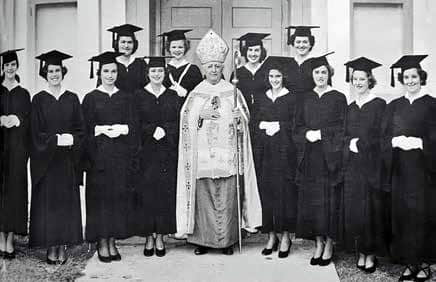
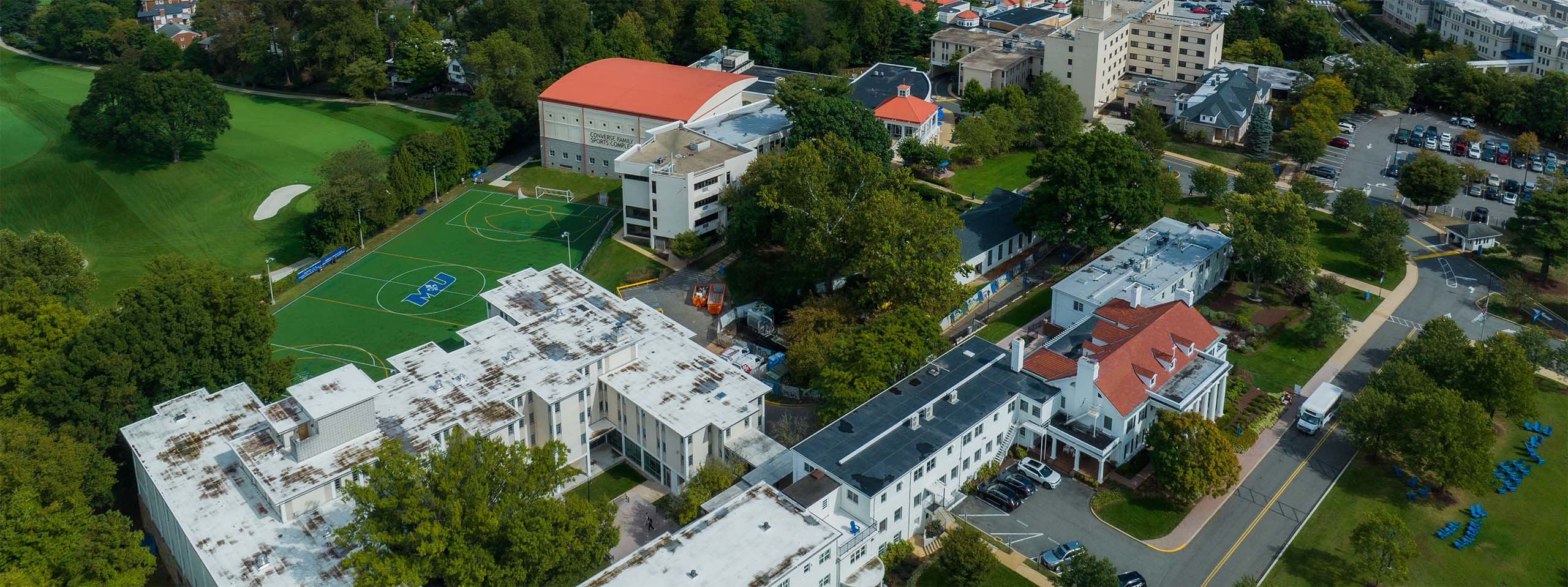
Marymount University, the first Catholic college established in Virginia, was founded by the Religious of the Sacred Heart of Mary in 1950. In 75 years, Marymount has grown from a two-year junior college for women into a comprehensive, nationally ranked, four-year doctoral-granting university. Marymount has adapted to our students’ needs with a modern, innovative, career-focused education while staying true to our founding values—values that cultivate a spirit of curiosity and service and foster intellect, compassion, and global citizenship. From our first class of 13 students to today’s 4,000 students from 51 states and territories and 66 countries, Marymount is where students explore their passions, pursue their dreams, positively impact the world, and Learn with Purpose.
1849 Religious of the Sacred Heart of Mary Founded
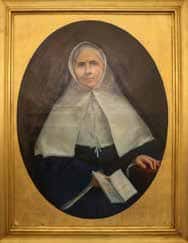
The Religious of the Sacred Heart of Mary (RSHM) was founded on February 24, 1849, in Béziers, France, by six women led by Mother St. Jean (Appollonie Cure) and guided by Father Jean Gailhac. They began their mission by overseeing a shelter for women and an orphanage, and by 1851, their community had grown to ten members. They began their U.S. mission in Sag Harbor, New York, focusing on education through parochial and private schools. They founded Marymount College in Tarrytown, New York, in 1907 and later expanded to California and Virginia. Today, the RSHM continues its mission through diverse educational, pastoral, and social ministries guided by faith, zeal, and a commitment to making God’s love known.
1919-20 Rixey Mansion Built
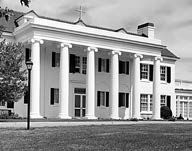
The Rixey Mansion, a stately Georgian-style home designed by architects Frank Upman and Percy C. Adams, holds a significant place in the history of Marymount. Perched atop an Arlington ridge with sweeping views, the mansion was built from 1919 to 1920 as the estate of Rear Admiral Presley M. Rixey, personal physician to Presidents William McKinley and Theodore Roosevelt. After Rixey died in 1928, the property changed hands until it was acquired by Marymount’s founders in 1948. The mansion, now called the “Administration Building,” became the heart of the university, hosting the RSHM nuns and the inaugural class of 13 freshmen in 1950. Now, the historic structure serves as a dynamic space for the university’s leadership and community, blending its rich legacy with modern functionality.
1949 Marymount Junior College Established
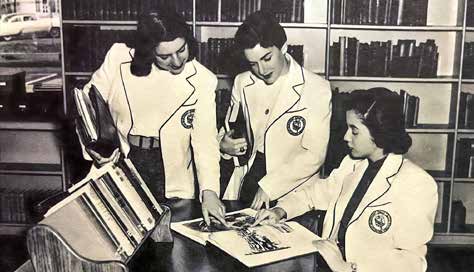
Marymount Junior College was founded in 1950 by the Religious of the Sacred Heart of Mary (RSHM) as a two-year women’s college at the invitation of Bishop Peter L. Ireton of Richmond. Starting with just 13 students, the college became part of a network of Marymount schools operated by the RSHM across the United States. The campus was located on the former estate of Rear Admiral Presley M. Rixey. The 21-acre property featured a stately mansion, now known as the Administration Building, a stone guest house called the Lodge, and two charming cottages, all of which became integral to the college’s operations and student life. Sister Elizabeth Gallagher, RSHM, served as Marymount’s first president, guiding the fledgling institution until 1955.
1951-55 Marymount’s Momentum Starts
Between 1951 and 1955, Marymount College experienced significant growth and development. In 1951, the Administration Building was expanded with two new wings, including a chapel and student residence halls, providing much-needed worship and on-campus living spaces. Gailhac Hall, the college’s first dedicated academic building, was completed the following year, marking a significant milestone in establishing Marymount’s educational infrastructure. In 1955, Sister Berchmans Walsh, RSHM, succeeded Sister Elizabeth Gallagher as Marymount’s second president, setting the stage for the college’s future success.
1960 Strengthening Foundations
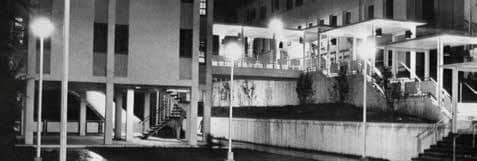
Marymount was formally incorporated as an independent college, governed by its own board of directors, which solidified its status as a standalone academic entity. It was also renamed the Marymount College of Virginia. 1960 also marked the beginning of Sister M. Majella Berg’s remarkable 33-year tenure as Marymount’s third president, during which she would oversee extensive growth and transformation. The campus expanded significantly with the opening of new buildings, including Gerard Phelan Hall, Butler Hall, Rowley Hall, the Ireton Library, and the Academic Center, providing modern facilities to accommodate the college’s growing student needs.
1960s Flourishing through Expansion
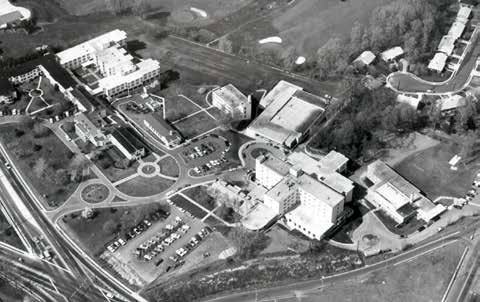
The decade began with the first award of the Mother Gerard Phelan Medal to actress Irene Dunne in 1961, highlighting the college’s commitment to honoring distinguished individuals. In 1962, Butler Hall was opened, including a gym and pool, which Bishop John J. Russell dedicated. By 1968, the dining hall’s expansion and the Gerard Phelan Annex’s development further enhanced student life and academic resources.
1970s Growing Opportunities
Growing Opportunities In 1972, men were first admitted to the Nursing program, marking a significant step toward coeducation. By 1973, Marymount became a 4-year college, offering bachelor’s degrees in more than 20 fields of study. This period also saw the introduction of graduate programs in 1979, expanding Marymount’s educational offerings to include master’s degrees.
1983 Joining the NCAA
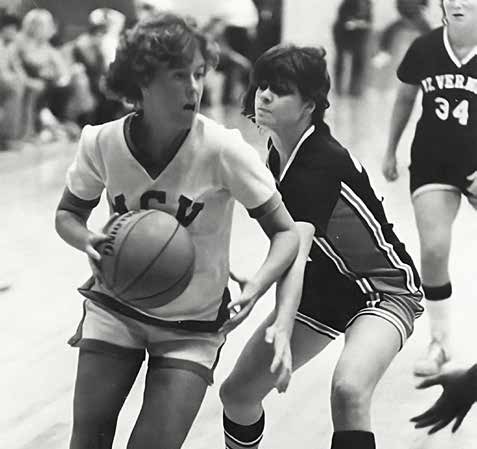
Marymount reached a significant milestone by joining the National Collegiate Athletic Association (NCAA), marking its official entry into collegiate athletics nationally. This move expanded the university’s commitment to fostering a well-rounded student experience by offering competitive sports opportunities. With this membership, Marymount athletes could compete against teams nationwide, further enhancing the university’s reputation and strengthening school spirit. The addition of NCAA athletics also contributed to the university’s growing sense of community and pride, as it offered new avenues for student involvement and achievement.
1986 Becoming Coed—and a University
Marymount took a significant step forward by becoming coeducational at all levels, opening its doors to both men and women across undergraduate and graduate programs. This shift was paired with a change in the institution’s status from Marymount College to Marymount University, reflecting its expanded offerings and growing academic stature. The same year, the university celebrated the dedication of the Spout Run Campus, featuring Virginia Governor Chuck Robb as the speaker.
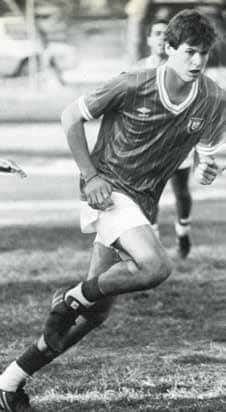
1987 Saints are Born
Marymount marked a pivotal moment in its athletic history when it introduced the first men’s teams, beginning with basketball, soccer, and swimming. This expansion into men’s sports was a significant step in the university’s commitment to providing a comprehensive athletic experience for all students. At the same time, the university made a notable change to its athletic identity by retiring the Blue Angels mascot and renaming all athletic teams the Saints.
1989 Forwarding Fashion
The term “Portfolio in Motion” was first introduced into the Marymount idiom and has been headlining its runway ever since. That same year, Colette Cunningham made history by setting the Division III women’s soccer scoring record with 98 points in just 18 games, a remarkable achievement and still the record. Additionally, Marymount became one of the six founding members of the Capital Athletic Conference, joining prestigious institutions like The Catholic University of America and Gallaudet University. These milestones marked a transformative period for the university, setting the stage for its continued growth and success in academics and athletics.

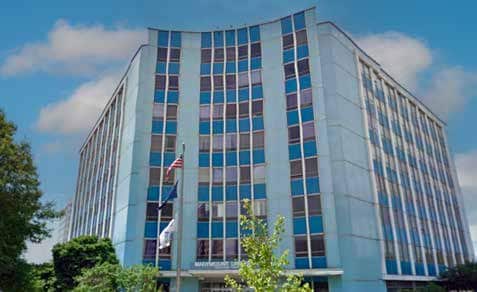
1992 Acquiring the Blue Goose
Marymount acquired the distinctive “Blue Goose” building in Arlington’s Ballston neighborhood to house its burgeoning graduate programs. Designed by architect John M. Walton and originally opened in 1963, the building was known for its striking polychromatic blue metal panels and unique geometric design, which earned it the local nickname of the “Blue Goose.” Developed initially by M.T. Broyhill and Sons, the building served as the developer’s office before becoming a landmark in the community. Once used by the CIA, the Blue Goose was a key acquisition for Marymount, helping to provide much-needed space for its expanding graduate programs.
1993 End of an Era
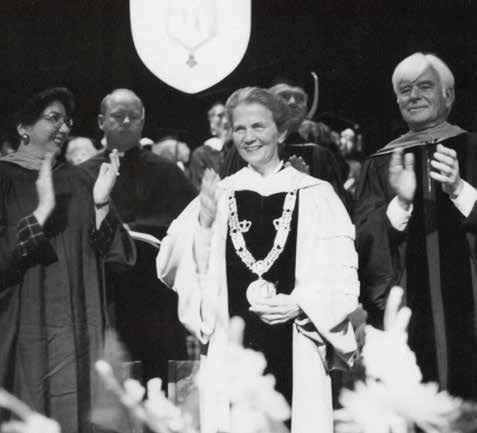
Sister Majella Berg retired after 33 years of transformational leadership at Marymount, leaving a lasting legacy of growth and success. When Sister Majella Berg became president in 1960, Marymount was a small, two-year women’s college with 240 students. Over her tenure, she transformed the university into a comprehensive, coeducational institution with 38 undergraduate and 23 graduate programs serving nearly 3,800 students. Her leadership saw the addition of campuses in Ballston and Sterling, significant growth in academic offerings, and the construction of numerous facilities. As one of the few female college presidents in the Washington, D.C. metro area and higher education at the time, Sister Majella’s exceptional fundraising and relationship-building skills secured the resources that fueled Marymount’s remarkable expansion. Her efforts also earned her recognition, including being named “Washingtonian of the Year” in 1990 and receiving the Pro Ecclesia et Pontifice medal from Pope John Paul II in 1993. This same year, Sister Eymard Gallagher, RSHM, succeeded her as president, continuing the institution’s upward trajectory. In athletics, Marymount’s women’s basketball team achieved a milestone by winning their third straight Capital Athletic Conference (CAC) title and securing their first NCAA Tournament victory with a 115-96 win over Christopher Newport.
1994 Spreading the Spirit of Service and Smiles
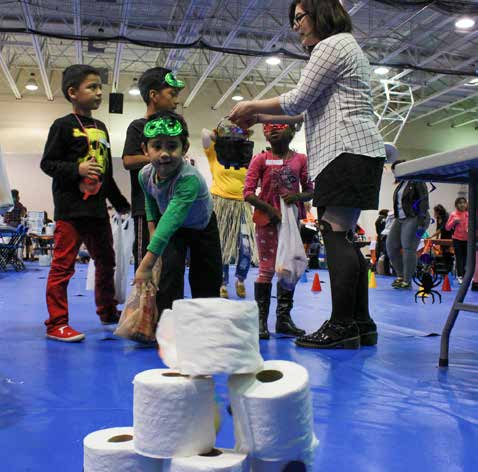
Since its inception in 1994, Halloween Fest has brought Marymount’s campus to life with festive spirit and community engagement. This cherished event invites local disadvantaged children to trick-ortreat through residence halls and enjoy a vibrant Halloween party filled with games, treats, and fun activities. Co-sponsored by various campus clubs, teams, and organizations, HalloweenFest embodies Marymount’s commitment to service and community, creating a joyful celebration that has become a highlight of the academic year for students and local families.
1995 Bernie’s Birthday Bash
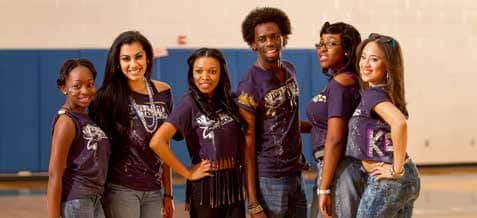
On April 15, the campus barked with excitement as Bernie the St. Bernard was born, officially becoming the furry face of the Saints. Not to be outdone, the Marymount Dance Team debuted, dazzling crowds with energy and spirit at campus events. The excitement didn’t stop there—Marymount tipped off its first-ever Special Olympics Basketball Tournament, an inspiring springtime tradition. With students from clubs and athletic teams stepping up as volunteers, the tournament brought the campus together to celebrate teamwork, inclusion, and sportsmanship.

2001 Celebrating Marymount’s 50th Class
Dr. James E. Bundschuh became Marymount University’s fifth president and its first lay leader. Marymount also hosted the inaugural National Cyber Ethics Conference, showcasing its dedication to advancing STEM education. Meanwhile, the Class of 2001 proudly became Marymount’s 50th graduating class, celebrating a half-century of scholarly achievement.
2005 A Beacon of Service
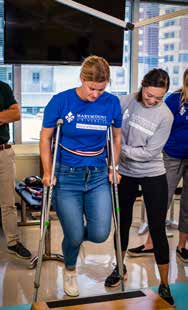
Marymount students demonstrated commitment to service and global engagement through an Alternative Spring Break program that expanded to include its first service trip to the Dominican Republic. This trip allows students to immerse themselves in community development and cultural exchange. Meanwhile, 15 students and faculty joined the Arlington Diocese to participate in World Youth Day in Cologne, Germany, connecting with young people from around the globe to celebrate faith and unity. These experiences underscored Marymount’s mission to prepare students as global citizens who lead with purpose and compassion. In 2005, Marymount University expanded its academic offerings by establishing its first doctoral degree, the clinical Doctor of Physical Therapy (DPT). This further solidified the university’s commitment to providing advanced education in the health sciences. Today, the DPT program is one of the university’s most soughtafter degrees.
2009-10 Expanding Horizons
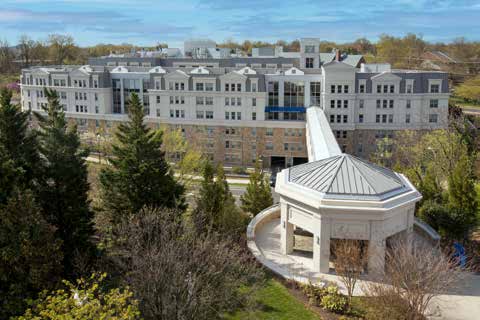
Marymount launched its second doctoral program, the clinical Doctor of Nursing Practice. In 2010, the university continued its campus transformation by opening Rose Benté Lee Ostapenko Hall, a new residence hall offering apartment-style living to students. This hall enhanced the on-campus experience and facilitated a vibrant community for Marymount’s growing student body.
2011 A Year of New Beginnings
Another transformative year for Marymount began with the opening of the state-of-the-art Caruthers Hall in January, which is dedicated to advancing the sciences. As a tribute to the university’s visionary leadership, a statue of Sister M. Majella Berg, RSHM, the longest-serving president in Marymount’s history, was unveiled outside Caruthers Hall, with Sisters of the RSHM present for the ceremony. This was followed by the arrival of Dr. Matthew D. Shank as the university’s sixth president, bringing new leadership and vision. The year also saw the symbolic burial of the Marymount time capsule, set to be opened in 2050 to celebrate the university’s centennial.
2012 Commitment to Healthcare
Marymount renamed its School of Health Professions to the Malek School of Health Professions in recognition of Marlene A. and Frederic V. Malek’s longstanding support and leadership. Marlene, a Marymount nursing alumna, has been a passionate advocate for cancer research. Fred, a distinguished businessman and former Marriott Hotels and Northwest Airlines CEO, has significantly contributed to the private sector and public service. The Maleks, who received Marymount’s Majella Berg Medal in 2011, have left an indelible mark on the university and the healthcare community, with their namesake school standing as a testament to their enduring legacy of service and commitment.
2016-17 Revitalization of Ballston
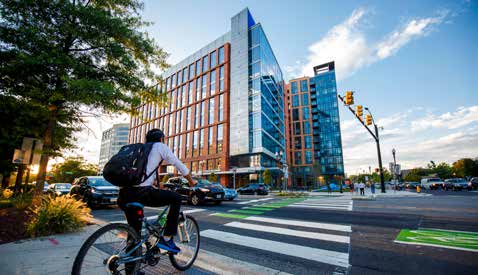
In 2016, Marymount began a transformative redevelopment project by demolishing the iconic “Blue Goose” building to make way for the Marymount Ballston Center, a dynamic new campus hub. This innovative mixed-use development features a 160,000-square-foot academic building and The Rixey (now Marymount Placemakr Ballston), a 15-story, 360,000-square-foot residential tower. The academic building offers cutting-edge facilities, including classrooms, collaborative workspaces, and resources designed for graduate students, faculty, and staff. The Rixey provides 265 luxury residential units, giving students and faculty a vibrant, convenient place to live just steps from campus. With a mix of office, residential, and academic spaces, Ballston Center enhances the student experience by providing access to D.C.-area internships, job opportunities, and a business-centric environment. This development exemplifies Marymount’s commitment to creating a live-work-learn community that prepares students for success in the 21st century.
2018 Growing Opportunities
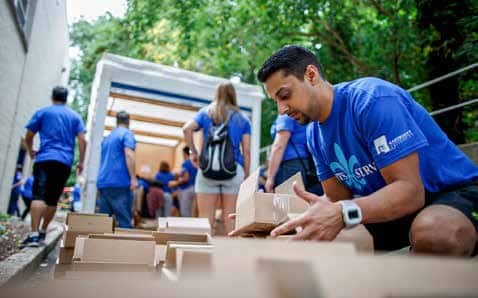
Marymount ushered in a new chapter by appointing Dr. Irma Becerra as its seventh president. Dr. Becerra, an experienced leader in higher education, brought a vision for innovation and community engagement that would shape the University’s future. That same year, Marymount launched a cutting-edge doctorate in cybersecurity aimed at working professionals seeking to advance in the rapidly growing field of applied research. In line with its mission of “service to others,” Marymount introduced the Saints Center for Service, reinforcing the University’s commitment to fostering social responsibility and empowering students to make a meaningful impact in their communities.
2020 Serving Our Community
Marymount took significant strides to enhance its academic offerings by restructuring its academic programs into three highly focused colleges: the College of Arts and Sciences, the College of Business, Innovation, Leadership, and Technology, and the College of Health and Education. This new organization creates a more integrated approach to education that fosters broader interdisciplinary opportunities for students and faculty. The restructuring supported a commitment to cutting-edge research and a more dynamic learning environment. In the same year, Marymount earned the prestigious designation as Virginia’s first and only Hispanic-serving institution, reflecting its diverse student body, with over 25 percent of undergraduates identifying as Hispanic. This milestone underscores Marymount’s dedication to fostering an inclusive academic community and providing equitable access to higher education for all students.
2022 Achieving National Prominence
Marymount achieved a remarkable milestone by being ranked for the first time on U.S. News & World Report’s prestigious list of “Best National Universities.” This distinction marks a significant leap from its previous status as a regional university, reflecting the institution’s commitment to providing top-tier educational experiences that prepare students for impactful careers. U.S. News & World Report ranks colleges and universities to guide prospective students in making one of the most important decisions of their lives—selecting a school that aligns with their goals and provides long-term value. With an education that consistently leads to greater earning potential, lower unemployment rates, and enhanced quality of life, this recognition validates Marymount’s mission to equip students with the knowledge and skills they need to succeed. This ranking places Marymount among an elite group of institutions, underscoring its growing reputation and commitment to excellence in education.
2024-2025 Unstoppable Momentum
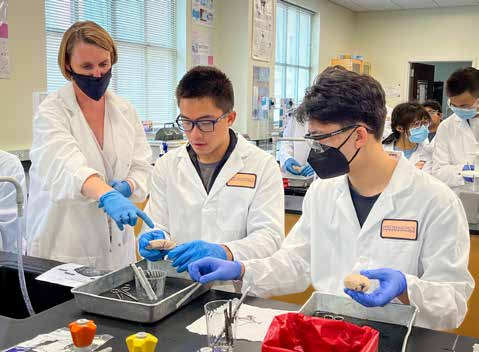
In 2024-2025, Marymount has reached new heights, reflecting the relentless pursuit of excellence and the unwavering support that drives student success. Welcoming the largest incoming class in its history, the University set a remarkable enrollment record with unprecedented growth in undergraduate, graduate, and doctoral programs. The year also marked historic fundraising achievements, with over $7.5 million raised to enhance scholarships, launch new initiatives, and improve campus infrastructure. Students are thriving with the introduction of programs like MU 101 and expanded career development opportunities. At the same time, significant investments in residence halls, dining services, and diversity initiatives demonstrate Marymount’s commitment to fostering an inclusive and dynamic learning environment. As the Reinsch Pierce Family Campus Hub nears completion and a modernized Workday suite streamlines operations, the University continues to celebrate and build on its momentum while celebrating its 75th anniversary. These milestones reflect a shared vision for the future, prioritizing student success, innovation, and community impact. With the enduring support of donors, faculty, and alumni, Marymount is building an extraordinary legacy of purpose-driven growth for the next 75 years.